Are Crickets Beneficial to Gardens? Benefits and Risks
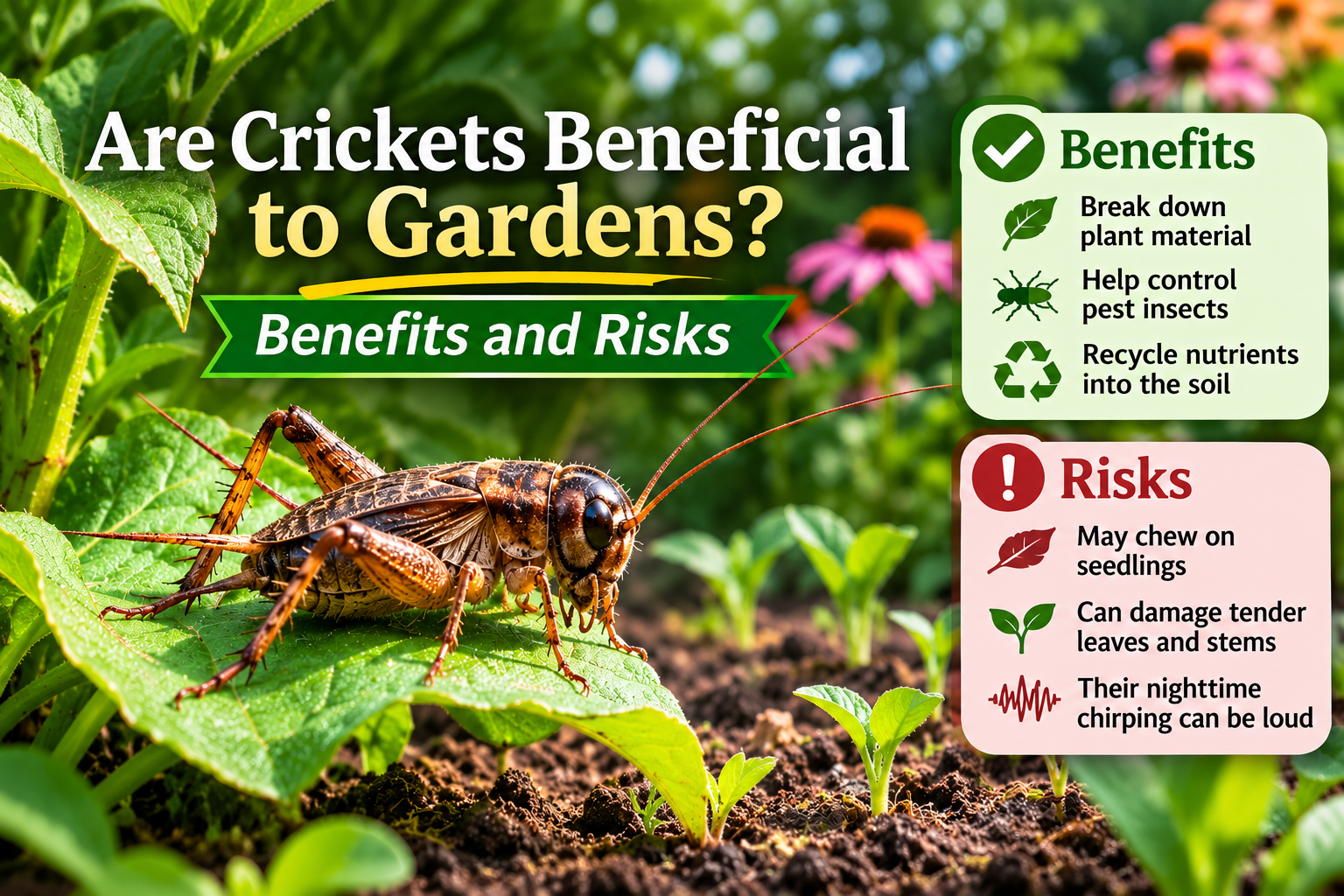
Sometimes yes, if you are asking are crickets beneficial to gardens Crickets are a food source for birds, spiders and amphibians, along with many other predators in the garden food web. Some also feed purely on rotting plant debris. However, some of the species can feed on seedlings, delicate shoots and yet leaves. Specific species and the quantities of them all affect whether they assist or hinder your garden.
The Benefits of Crickets in a Garden
So crickets may be only one small piece of the garden puzzle, and their contributions to your success aren’t always readily visible. Understanding are crickets beneficial to gardens depends on their role in the garden ecosystem and whether they are causing plant damage.
Crickets Offer Wildlife Food for Birds, Frogs, Lizards, and Other Insect-Chewing Monsters
Decomposition of organic matter: Certain species feed on plant waste and other decomposing organisms, helping to recycle nutrients into the soil. They are only one aspect of this procedure and they do not replace compost.
FOOD WEB SUPPORT: Crickets serve as prey for the animals that live in and around gardens.
Having a couple of crickets in the vicinity of a mulch or compost area really is not an issue. Nor does their mere presence prove the soil is healthy or that there are balanced insect colonies in the garden.
How to Stop Crickets From Damaging Plants In The Garden
Some crickets eat living plant material, especially when tender sprouts are present. Young vegetable seedlings and ornamentals planted into well-decomposed soils may be more prone than older, established plants.
Feeding indicators may be small holes in leaves, shredded leaf edge, tender shoots damaged, and seedlings with abbreviations close to the soil surface. In addition to grasses, crickets will feed on floral parts or even young plants, depending on the species and circumstances.
But that doesn’t mean every injured leaf is the work of crickets. Those same marks can also be left by slugs, snails, caterpillars and beetles. This ensures that instead of spraying here and there, we can decide on the insect control method once we have rightly identified the accurate one.
Buffered Data vs CricketsTrace Data Methods
Before you do anything, check these simple checks:
1. Inspect after dark: As a lot of these crickets are more nocturnal and active in the evening, dusk is another good time to check around some plants.
2. Look closely at damaged growth: Look for insects or other evidence on leaf edges, young leaves and stems, seedlings, and soil surface.
3. Check for a pattern: Keep an eye on what plants are attacked, and if the damage is spreading.
4. Monitor over several days: A few holes in a healthy plant might not be cause for concern, but repeated munching on seedlings warrant care.
Just seeing a cricket in a flower bed is not a reason to get rid of it. Emphasize on signs of active plant damage.
Free Pest Control for Crickets Without Doing Damage to the Garden
Begin with lower-impact options before applying treatments to an entire garden if crickets are harming plants.
1. Weed Problem Areas: Practical weed control should remove abundant weeds and dense debris immediately in close proximity of vulnerable seedlings, retaining useful habitat areas elsewhere.
2. Keep Crickets Off Seedlings: Row covers or cone protection can be used to protect young plants. Monitor covers and only cover when plants do not need pollinator access
3. Physical removal: Hand-remove crickets any time possible, particularly if only a few plants are being damaged.
Water where required, taking care not to create conditions that are unnecessarily humid and sheltered in the vicinity of vulnerable plants.
4. Be judicious with curative treatments: Treat only if damage justifies disease control. Read the product label and do not apply broadly as to potential damage or disruption of beneficial insect.
Crickets are usually not a problem in the garden, says the University of California’s Integrated Pest Management program, but when populations are large they can ruin row upon row of seedlings in very short order.
Difference Between Crickets and Grasshoppers
Crickets and grasshoppers both belong to the insect order Orthoptera yet have different appearances/personalities. Most crickets are long-bodied with conspicuous and usually long antennae, and many species are nocturnal. Grasshoppers are typically diurnal and have shorter antennae.
Neither group should be automatically regarded as non-pests or pests because both contained plant-feeding species.
Frequently Asked Questions
While some crickets feed on decaying organic matter and aid nutrient cycling, their contributions to the soil are both minimal, at best, and species specific. While composite, the right organic stuff, good drainage and proper soil management have way more impact on the quality of garden soil.
Q. Crickets feed on flowers and vegetables.
Ans. Certain species have a diet consisting of tender shoots, leaves, seedlings and other plant material. Species and available food affect the damage. Examine damaged plants before concluding that crickets have caused the problem.
Q. Kill or Not: Crickets in My Garden
Ans. Usually not. If the plants are healthy and there is no evidence of damage then best left alone. Seedlings may be repeatedly chewed if this is the case trial protection from physical barriers or target removal before using further controls.
Q. Do crickets eat seedlings?
Ans. Yes, some do chew foliage or stems of younger seedlings. Inspect plants at night, verify the presence of crickets and shield tender seedlings with proper coverings or cones.
Q. After the warms up, you can hear them singing crickets and grasshoppers.
Ans. No. These insects are closely related, but differ in antennae length, activity patterns and other features. Plant-eating broadly includes both, depending on the species.
Final Thoughts
Moreover, crickets could be a part of the garden food web and in some contexts provide a means of processing organic material. When they exist in numbers, nevertheless, they will even hurt weak vegetation. Understanding are crickets beneficial to gardens requires considering their species, population size and feeding behavior. Instead of removing every cricket you see, focus on identifying the insect pest, keeping an eye on how much damage is being done and only acting when seedlings need protecting.